
You can have the highest possible R-value insulation in your roof but if it’s not properly designed for vapour control, its performance will likely eventually be compromised.
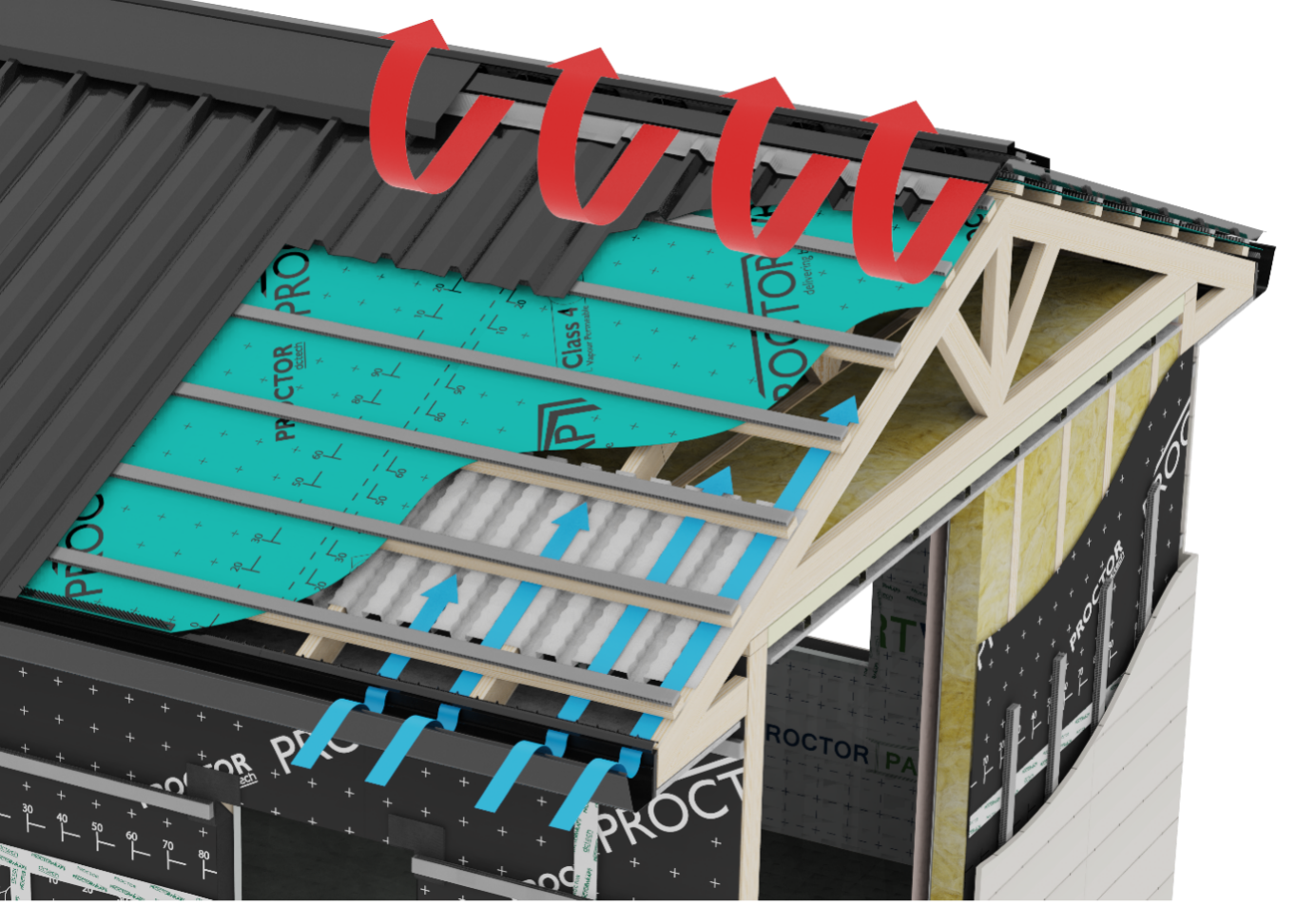
There are two broad strategies for roof design used in Australia to minimise the potential of condensation in the roof or attic space. They are Attic Ventilation and Above Membrane Ventilation.
This article from DCTech looks at the Above Membrane Ventilation strategy, and useful products you may want to consider for a successful setup.
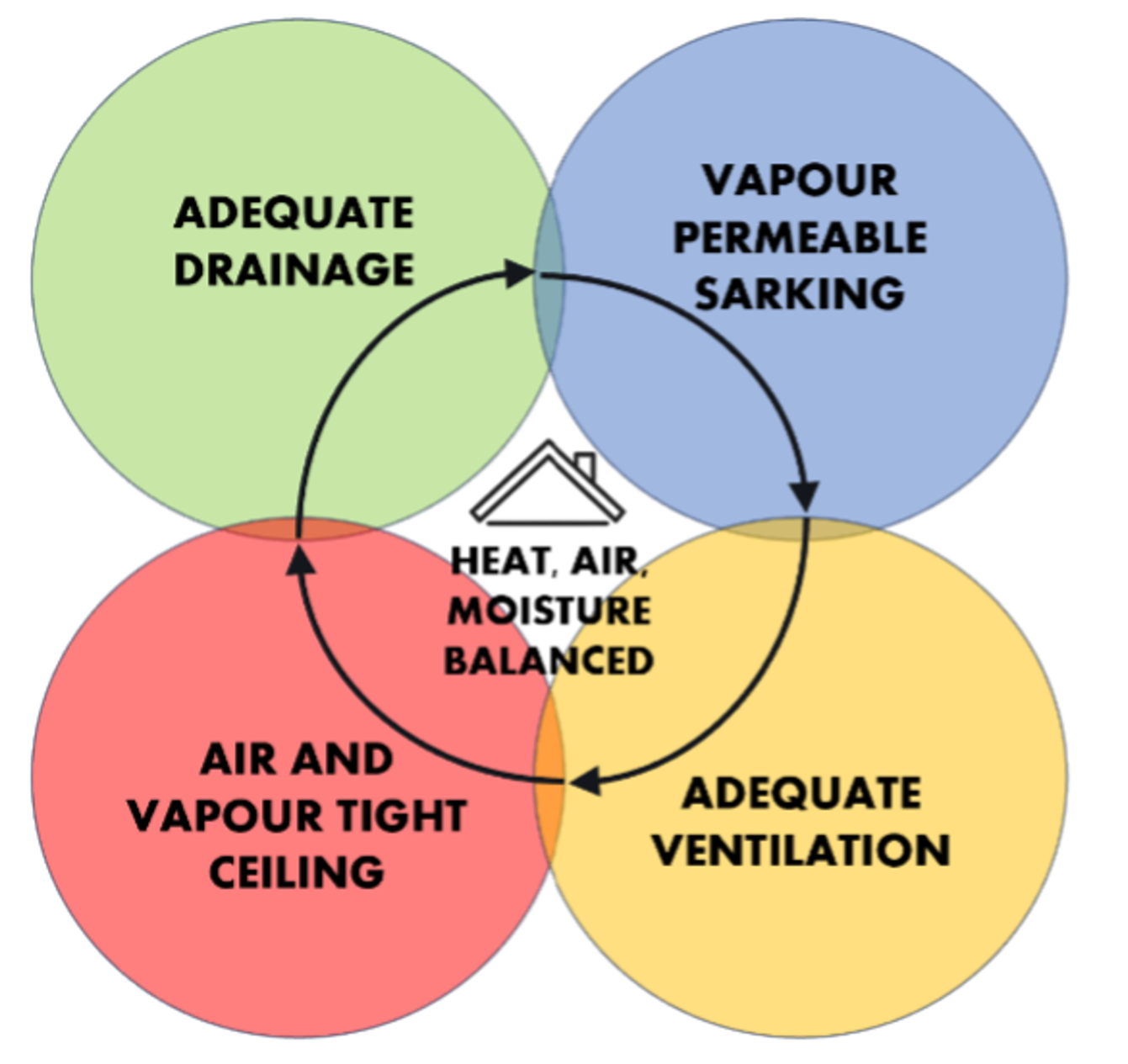
The key to achieving a high-performance above membrane roof system lies in managing the balance between heat, air, and moisture by adopting the four strategies shown in the diagram below.
Adequate Drainage
Poor drainage can allow moisture to penetrate the building envelope, which can result in issues such as timber rot, mould growth, and reduced insulation performance. In cool and/or humid climates, condensation is all but guaranteed to form at times under a single skin metal roof sheet so it is critical to prevent this moisture from reaching sensitive materials. Adequate drainage can be achieved by using a product like ProctorVentVB10 battens, immediately above the water barrier to provide separation from the cold condensing surface of the metal sheet. This ensures that moisture forming under the metal sheet will drop onto the water barrier and drain to the gutter.
Vapour Permeable Sarking
Following the principles adopted for external walls, vapour permeable sarking in temperate to cold climates should be used to ensure vapour in the roof space can safely diffuse to the exterior side of the assembly. ProctorWrapHTS and ProctorWrap HTRare an alternative to traditional foil-faced blankets due to their Class4 vapour permeance and water barrier properties that allows vapour to escape and prevents water coming in.
Adequate Ventilation
To achieve adequate ventilation, and comply with building codes for cool climates, openings should be provided at the top and bottom of the roof slope, and the ventilation pathway must be unobstructed. At the low level, ProctorVent FV10 or FV25 can be installed over the fascia to allow air flow into roofs with or without eaves. At the ridge, ProctorVent RV10 provides an outlet which, in conjunction with fascia vents, encourages full passive ventilation of the roof space. Roof pitch and insulation placement dictate product choice, so verify your requirements before specifying.
Air and Vapour Tight Ceiling
The interior of the building is the primary source of vapour within the roof space and limiting the amount of vapour is critical to reducing the condensation risk. You can fix this by making the ceiling airtight and ensuring the living areas are well-ventilated, however, achieving a perfect seal is difficult in homes with many recessed downlights. An optimal solution is to utilise an air and vapour barrier such as Proctor Passive Smart Vap 100 with a batten cavity to accommodate the downlights. This allows you to maintain the look you want without compromising the performance of the roof.
You can check out the DCTech Technical Library for more total system solutions.