
What builders and designers need to know — for new builds and retrofits alike
The conversations builders and designers are having with clients are changing. Health, comfort, energy costs, long-term resilience — these are showing up at the first meeting, in the brief, and in how clients choose who to work with. For professionals ready to meet that shift, it represents a genuine opportunity to deepen the value they bring to every project.
New builds and retrofits are different problems. They need different thinking.
New Builds: Locking In Performance From Day One
A new build is the cleanest opportunity in construction — and where embodied carbon is decided before a single occupant moves in. Material selection at specification stage can account for up to 50% of a home's total lifetime carbon footprint. Builders and designers who understand this are already having a different conversation with their clients.
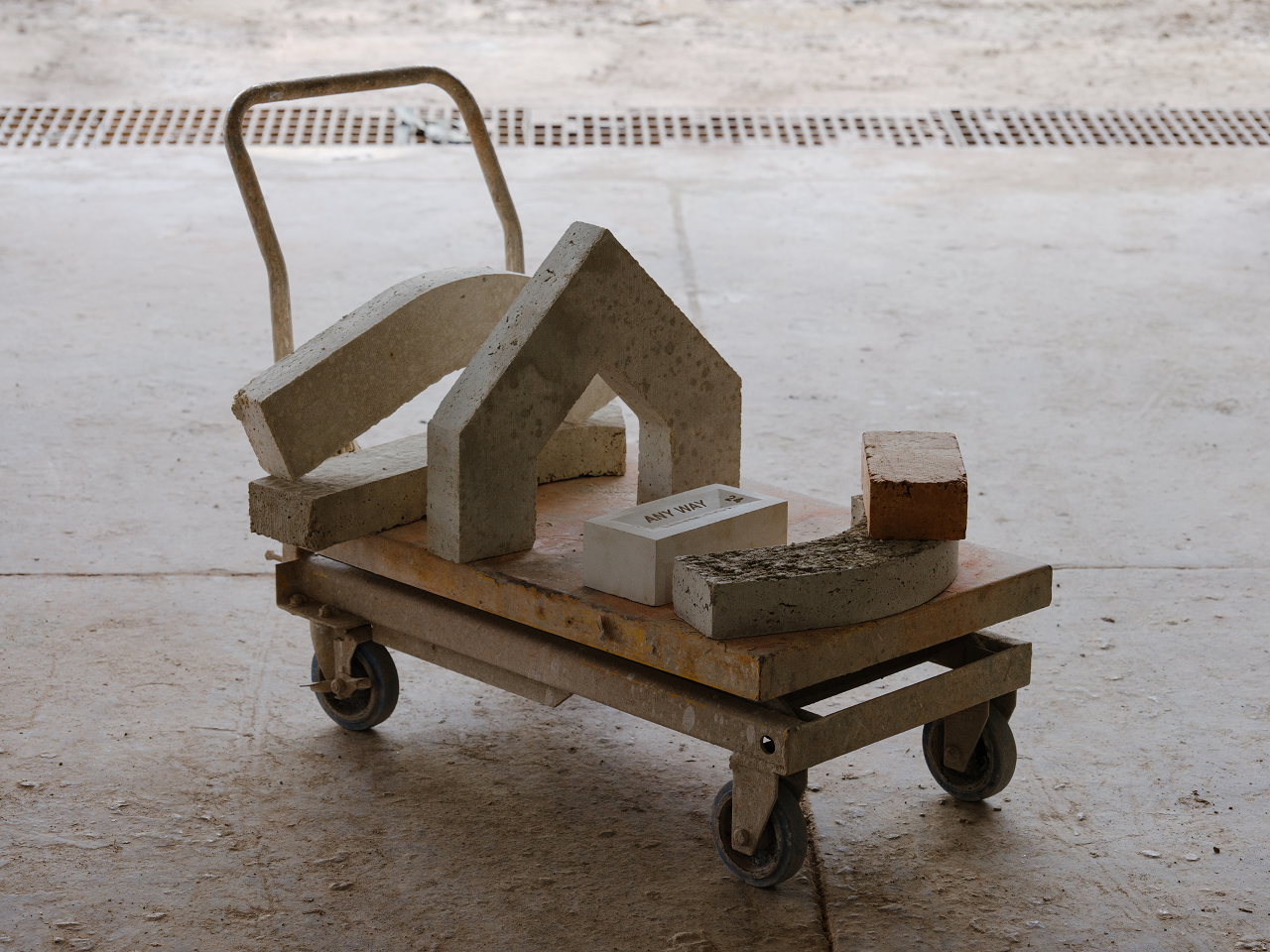
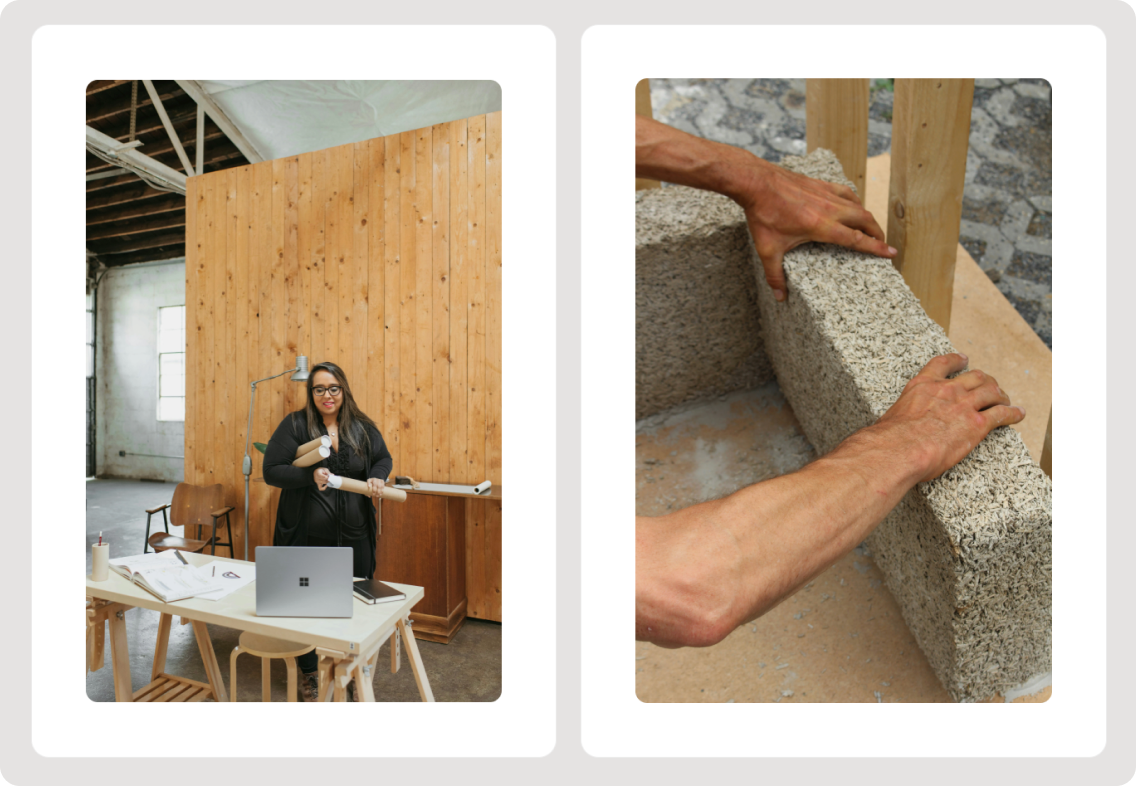
Lower-carbon alternatives are available across most categories, and many carry no meaningful cost premium. Reclaimed timber typically offers minimal embodied carbon, FSC-certified plantation timber provides credibly accounted alternatives, and recycled brick diverts waste and comes at a fraction of the carbon profile of conventional masonry. For insulation, the choice matters more than it appears — bio-based options like wood fibre insulation deliver strong thermal performance alongside renewable sourcing credentials, and their EPD data tells a very different story to standard petrochemical batts.
The thermal envelope remains foundational. Up to 40% of a home's heating energy can be lost, and up to 87% of its heat gained, through windows alone. Glazing specified by orientation, insulation calibrated to climate zone, airtightness that works with the structure. These decisions determine whether a building genuinely performs.
Inside the envelope, low and zero VOC finishes, adhesives, and linings protect indoor air quality from day one. Australians spend around 90% of their time indoors, and indoor air pollution is linked to respiratory disease, heart disease, and cognitive impairment. Products with EPDs, GREENGUARD or Red List credentials give clients verifiable evidence that health was part of the brief, not an afterthought.
The market is already responding. Domain's 2025 Sustainability in Property Report found homes with energy-efficient features selling for an average of $118,000 more — a 14.5% national premium, rising to 23.8% in Melbourne. Builders who can document what they specified and why, are increasingly the ones winning projects with clients who care about legacy.
Retrofits: Working With What's Already There
Retrofitting an existing building is a more diagnostic conversation. The structure, materials, and moisture dynamics are fixed constraints and improving performance without creating new problems is where experienced professionals earn their reputation.
Energy performance upgrades can deliver net annual savings of $1,058–$1,578 from the first year, and households combining insulation, heat pumps, and solar can save much more. But in older buildings, particularly solid masonry, the method matters as much as the upgrade. Sealing a building without understanding existing moisture behaviour can trap condensation inside the wall assembly, causing the very dampness problems the retrofit was meant to solve.
Vapour-permeable solutions are the answer. Breathable membranes, open-cell insulation systems, and moisture-managing linings allow walls to dry naturally. For masonry in particular, mineral silicate coatings offer a compelling and often overlooked option. Unlike standard acrylic paints, which form a film that traps moisture, silicate mineral paints form a microporous matrix that repels liquid water while allowing trapped moisture to escape as vapour. They chemically bond with the substrate, resist algal and fungal growth, and deliver exceptional durability in moisture-prone conditions.
Beyond the envelope, specifying low-emission replacements, planning ventilation strategy, and sequencing the work correctly are all decisions that a builder's experience genuinely shapes — and that clients increasingly want explained before work begins.
Building a Practice That Compounds
The professionals best placed to capture growing demand for healthier, more resilient buildings are not necessarily the largest firms, they are the ones who have done the work to understand what they are specifying, and can show it.
Every project built through Evitat adds to a practice's curated product library — a compounding asset that turns each job into lasting knowledge. That library becomes the foundation for winning projects with purpose: client conversations backed by data, capability statements grounded in evidence, and a clear point of difference in a market where clients are actively choosing who they trust with their home.
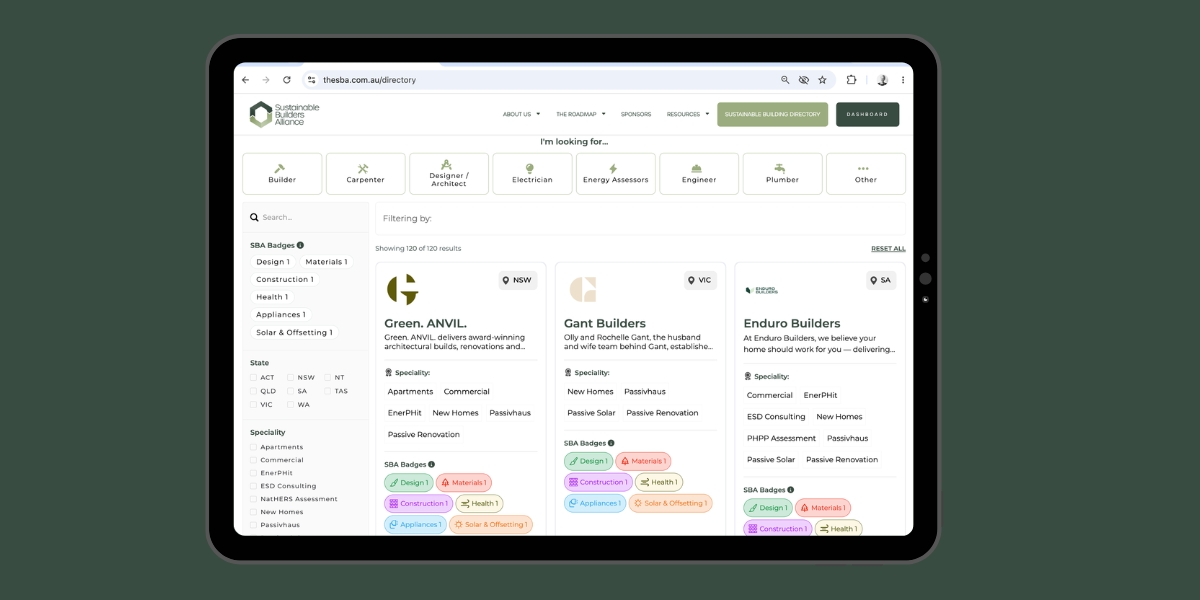
The Sustainable Builders Alliance is already connecting those clients with practitioners working at this level. The next conversation starts with being ready to meet them.
About Evitat
Evitat is a material intelligence platform for the built environment — giving builders, designers and specifiers AI-powered access to certified product data, collaborative material schedules, and client-ready sustainability credentials on every project.